 United States (English)


Dental Membrane Solutions
Elevating Predictability in Guided Bone Regeneration (GBR) with High-Quality Dental Membranes
Achieving predictable, successful outcomes in dental implantology is often dependent on Guided Bone Regeneration (GBR), a technique used to regenerate deficient bone volume1. The core principle of GBR is the selective exclusion of faster-migrating soft tissue cells from a bone defect site, thereby reserving the space for slower-migrating, osteogenic cells (bone-forming cells)2.
Implant Direct offers a comprehensive portfolio of barrier membranes—including both resorbable and non-resorbable options—that are specifically engineered to optimize the GBR procedure3. These membranes are designed to protect the bone graft material, maintain space over the defect, and facilitate the natural regeneration of host bone, empowering clinicians to confidently manage a wide range of bone augmentation procedures4.
Resorbable Membranes: Simplifying Protocols for Natural Healing
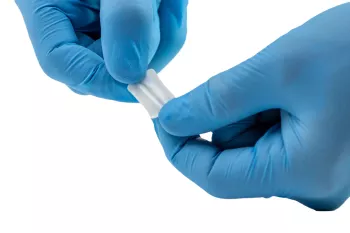
Resorbable barrier membranes are designed to be naturally absorbed by the body over time, which eliminates the need for a second surgical procedure for removal5. This simplification is beneficial for both the clinician and the patient, reducing morbidity and overall cost6,7.
Implant Direct's resorbable membranes utilize advanced collagen, including porcine-derived options, which are known for their biocompatibility and ability to support a prolonged barrier function8,9. This extended barrier function is crucial for ensuring the graft material is protected throughout the critical bone healing phase before the membrane gradually resorbs10.
Resorbable Membrane Solutions
Product
Material
Key Feature
Clinical Indication
Barrier Function Time Approx 20 Weeks12
Non-crosslinked Porcine Peritoneum Collagen
High suture pullout strength, easy handling, not side-specific11.
Extraction socket preservation, graft containment, minor ridge augmentation.
Barrier Function Time Approx 3-4 Months14
Porcine Collagen
Optimized for flexibility and contouring to complex defects13.
Periodontal defect repair, ridge augmentation, sinus augmentation.
Barrier Function Time Approx 3-4 Months15
Bovine Collagen
Highly purified Type-1 collagen, known for excellent biocompatibility8.
Protecting fenestration/dehiscence defects, general GBR.
Barrier Function Time extended16
Advanced Resorbable Matrix
Designed for barrier function and space maintenance16.
Larger GBR cases, complex defects requiring longer protection.
Non-Resorbable Membranes: Maximizing Space Maintenance
Non-resorbable membranes, often made of high-density PTFE (polytetrafluoroethylene), are considered the gold standard when maximum space maintenance is critical17. These membranes are particularly useful for large vertical or horizontal ridge augmentation procedures where structural integrity must be maintained against soft tissue pressure18. A planned second-stage surgery is required for their retrieval19.
Non-Resorbable Membrane Solutions
Product
Material
Key Feature
Clinical Indication
Excellent Space Maintenance20
High-Density PTFE (d-PTFE)
Non-resorbable surface is designed to prevent bacterial ingress and soft tissue integration20.
Augmentation where primary closure is difficult or in two-stage procedures21.
Maximum Space Maintenance22
Titanium-Reinforced d-PTFE
Incorporated titanium struts allows for customized, rigid tenting over the defect22.
Large volume augmentation, complex ridge defects, and cases requiring significant vertical space23.
Benefits of Non-Resorbable Solutions
-
Rigid Space Maintenance: Titanium-reinforced options can be bent and molded, which guarantees space over the graft material, a crucial factor for predictable bone growth, especially in large defects24.
-
Superior Barrier Integrity: High-density PTFE (d-PTFE) provides superior barrier function25. Furthermore, studies have shown that d-PTFE membranes have high clinical success rates, even in cases of minor exposure, due to their non-porous surface26.
-
Simplified Removal: The lack of tissue integration with d-PTFE membranes is an inherent material property that facilitates simple and easy removal during the second-stage surgery27.
The Role of Membranes in Successful GBR: The P.A.S.S.
Principle Successful GBR is typically evaluated based on the application of the four well-established P.A.S.S. principles28. Implant Direct's dental membrane portfolio supports all phases of this process, providing clinicians with reliable solutions to address bone volume deficiencies3.
Principle
Membrane's Contribution
Primary Closure
The membrane acts as a protective shield for the underlying bone graft, isolating it from the oral environment and preventing contamination29.
Angiogenesis
By stabilizing the blood clot and protecting the area from mechanical disruption, the membrane encourages blood vessel formation, which is vital for providing nutrients to the regenerating tissue 30.
Space Maintenance
By stabilizing the blood clot and protecting the area from mechanical disruption, the membrane encourages blood vessel formation, which is vital for providing nutrients to the regenerating tissue31.
Stability
The membrane provides mechanical stability, aiding in the immobilization of the bone graft particles, which is a prerequisite for predictable healing and bone formation 32.
References
1. Hämmerle, C. H. F., & Jung, R. E. (2018). Guided Bone Regeneration. Periodontology 2000, 77(1), 22–37.
2. Nyman, S., Lindhe, J., Karring, T., & Rylander, H. (1982). New attachment of an experimentally reduced periodontium in dogs. Journal of Clinical Periodontology, 9(3), 257–265.
3. Implant Direct. (2024). Biomaterials Portfolio. [Manufacturer's Product Information].
4. Buser, D., Dula, K., Hirt, H. P., & Schenk, R. K. (1996). Lateral ridge augmentation using autografts and barrier membranes: a clinical and histological study in the maxilla. Clinical Oral Implants Research, 7(Suppl 1), 150-160.
5. Simion, M., Trisi, P., & Maglione, M. (1998). A comparative study of two resorbable membranes (collagen and poly(L-lactide) on bone regeneration in rabbit. Clinical Oral Implants Research, 9(6), 395-403.
6. Jung, R. E., Pinter, M., & Hämmerle, C. H. F. (2018). The use of membranes in oral and maxillofacial surgery. Periodontology 2000, 77(1), 160-176.
7. Tinti, C., & Parma-Benfenati, S. (2016). Mucogingival Surgery and Bone Regeneration. In: Jensen S.S., Hämmerle C.H.F., Jung R.E. (eds) Bone Regeneration. Quintessence Publishing.
8. Wang, H. L., & Avila, G. (2007). Collagen membrane as a barrier for guided bone regeneration. Journal of Periodontology, 78(11), 2095-2101.
9. Rothamel, D., Schwarz, F., Herten, M., Sculean, A., Scherbaum, W., & Becker, J. (2005). Regeneration of a mandibular bone defect using a new biodegradable collagen membrane: a histomorphometric study in the dog. International Journal of Oral & Maxillofacial Surgery, 34(8), 841-848.
10. Moses, O., & Tal, H. (2015). A critical review of the current evidence on the use of resorbable membranes in guided bone regeneration. Journal of Clinical Periodontology, 42(Suppl 16), S127-S138.
11. Implant Direct. (2024). Kontour Matrix™ Product Information. [Manufacturer's Product Information].
12. Data on File. (2024). Kontour Matrix™ Resorption Time. [Internal Report].
13. Implant Direct. (2024). Kontour Sustain™ Product Information. [Manufacturer's Product Information].
14. Data on File. (2024). Kontour Sustain™ Barrier Function. [Internal Report].
15. Data on File. (2024). Cytoplast™ RTM Barrier Function. [Internal Report].
16. Implant Direct. (2024). Kontour AM™ Product Information. [Manufacturer's Product Information].
17. Buser, D., Dahlin, C., & Schenk, R. K. (1994). Guided Bone Regeneration in Implant Dentistry. Quintessence Publishing Co, Inc.
18. Simion, M., Baldoni, M., Zaffe, D., & Cannoni, D. (1990). Guided bone regeneration using a non-resorbable membrane in the treatment of bony defects around implants. International Journal of Periodontics & Restorative Dentistry, 10(3), 215-227.
19. Jovanovic, S. A., Nevins, M., & Rasperini, G. (1998). Bone regeneration around titanium implants using non-resorbable membranes. Clinical Oral Implants Research, 9(6), 369-379.
20. Becker, W., Dahlin, C., Sennerby, L., Lekholm, U., Becker, B. E., & Higuchi, K. (1996). The use of e-PTFE barriers for bone promotion around titanium implants that have a marginal bone defect. An experimental study in dogs. International Journal of Oral & Maxillofacial Implants, 11(2), 146-152.
21. Implant Direct. (2024). Cytoplast™ TXT Product Information. [Manufacturer's Product Information].
22. Implant Direct. (2024). Cytoplast™ Ti-250 Product Information. [Manufacturer's Product Information].
23. Buser, D., Brägger, U., Lang, N. P., & Nyman, S. (1990). Regeneration and enlargement of severely resorbed maxillae using guided bone regeneration. A clinical study. Clinical Oral Implants Research, 1(4), 183-191.
24. Schenk, R. K. (1994). Histologic principles of bone regeneration. In: Buser, D., Dahlin, C., & Schenk, R. K. (Eds.). Guided Bone Regeneration in Implant Dentistry. Quintessence Publishing Co, Inc.
25. Zide, M. F., & Kent, J. N. (1998). Guided bone regeneration and soft tissue augmentation in the maxilla and mandible. Oral Surgery, Oral Medicine, Oral Pathology, Oral Radiology, and Endodontology, 85(5), 523-528.
26. Simion, M., Jovanovic, S. A., Tinti, C., & Schenk, R. K. (1996). Vertical ridge augmentation around dental implants using a membrane technique and a combination of demineralized freeze-dried bone allograft and autogenous bone: a clinical and histologic study in humans. International Journal of Periodontics & Restorative Dentistry, 16(1), 1-13.
27. Dahlin, C., Linde, A., Gottlow, J., & Nyman, S. (1988). Healing of bone defects by guided tissue regeneration. Plastic and Reconstructive Surgery, 81(5), 672-676.
28. Buser, D., Dula, K., Hess, D., Hirt, H. P., Von Arx, T., & Graf, B. (1998). Localized bone regeneration in the maxilla using guided bone regeneration. Part 2: Surgical procedure and clinical results. International Journal of Periodontics & Restorative Dentistry, 18(4), 309-323.
29. Karring, T., Nyman, S., & Lindhe, J. (1980). Healing following implantation of permanent teeth with dentin-cementum-free surfaces. Journal of Clinical Periodontology, 7(1), 49-57.
30. Nevins, M., Camelo, M., Nevins, M. L., Schupbach, P., Kim, D. M., & Cochran, D. L. (2007). Periodontal regeneration in humans utilizing a combination of allograft and a membrane. International Journal of Periodontics & Restorative Dentistry, 27(5), 459-468.
31. Von Arx, T., & Buser, D. (2006). Horizontal and vertical bone augmentation using the GBR technique. Periodontology 2000, 42(1), 105-122.
32. Hammerle, C. H. F., Jung, R. E., & Lindhe, J. (2003). GBR with non-resorbable membranes. In: Lindhe, J., Karring, T., & Lang, N. P. (Eds.). Clinical Periodontology and Implant Dentistry (4th ed.). Blackwell Munksgaard.