 Canada (English)



Key Clinical Indications for Dental Bone Milling/Profiling
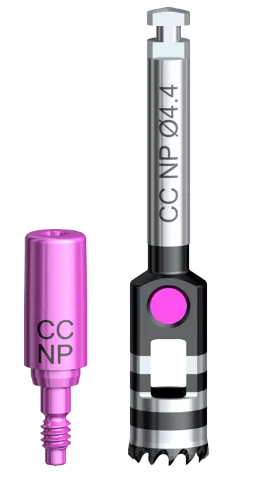
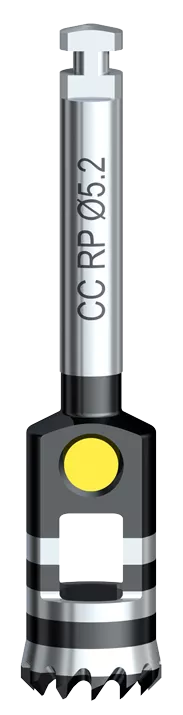
Essential for maintaining structural clarity during complex surgical protocols, a Dental Bone Mill/Profiler provides post-osteotomy modification by removing excess bone surrounding the coronal aspect or connecting platform of a conical dental implant, like Simply Iconic.
Utilized either immediately after implant placement or following the healing phase, this specialized drill instrument clears obstructive hard tissue to ensure proper seated alignment and facilitate the seamless subsequent placement of prosthetic components*.
To optimize surgical control and prevent over-milling, the tool functions in conjunction with a dedicated, compatible guide temporarily secured to the implant connection, establishing a predefined milling depth and accurate position within the maxilla or mandible*.
Delivered non-sterile for reusable clinical application, these high-precision instruments can be operated manually or driven via a standard contra-angle handpiece, offering clinicians flexible handling options tailored to specific anatomical demands while prioritizing long-term restorative stability*.
-
Surgical Indication & Guidance: Designed with a cylindrical cutting surface, a Dental Bone Mill operates alongside a platform-fastened guide to limit milling to a controlled depth and precisely remove excess bone surrounding the implant interface*.
-
Flexible Drive Compatibility: Supports adaptable handling techniques within both maxillary and mandibular sites, allowing clinicians to operate the mill either manually or connected to a contra-angle handpiece*.
-
Maintenance & Sterilization: Supplied non-sterile for reusable clinical application; requires thorough visual inspection prior to each use for signs of degradation—such as corrosion, dull cutting edges, or illegible markings—to determine proper device disposal*.


Frequently Asked Questions:
1: What is a dental bone profiler, and why is it necessary?
A dental bone profiler, which can also be referred to as a “Bone Mill,” is a specialized rotary surgical instrument designed to clear away excess crestal bone or cortical overgrowth from around the coronal aspect (platform) of a dental implant. It may be used during the restorative phase of two-stage or subcrestal implant procedures to facilitate placement of healing abutments, scan bodies, impression copings, or prosthetic components when bone interferes with access to the implant platform.
2: What are the clinical risks of not using a bone profiler when bone overgrowth is present?
If bone remnants surround an implant platform, they may interfere with or make it difficult to fully seat a prosthetic component according to the manufacturer's instructions. Clinicians should verify that the implant platform is properly cleared before placing and torquing restorative components.
3: How does a bone profiler clear bone without damaging the titanium implant platform?
Engineered bone profiler systems utilize a dual-component design or a polished non-cutting base. When utilizing a two-piece system, a system-specific bone profiler guide (or pilot) is threaded directly into the internal connection of the implant. The hollow bone profiler slides over the guide pin, which helps maintain alignment with the implant platform during bone removal. Many manufacturers' bone profilers incorporate a built-in mechanical safety gap (typically around 0.1 mm) or a polished base that prevents the sharp cutting blades from ever making direct physical contact with the titanium implant platform.
4: What is the recommended drilling speed (RPM) for a dental bone profiler?
To ensure clinical safety and optimal performance, bone profilers should be operated at very low speeds—typically between 60 to 100 RPM for standard systems, and down to 50 RPM for certain single-piece configurations. You must always use a low-speed surgical handpiece with copious external sterile saline irrigation to prevent overheating the dense cortical bone. For device-specific guidance, always refer to the manufacturer's Instructions for Use.
5: What happens if a bone profiler is operated at too high an RPM?
Operating a bone profiler at excessive rotational speeds or with heavy downward force may generate intense frictional heat. Cortical bone is highly sensitive to thermal changes; temperatures exceeding 47°C (116°F) for more than a few seconds can induce localized bone necrosis (osteonecrosis)1. This may lead to chronic inflammation, loss of integration, and early failure of the adjacent implant fixture.
6: Can a single bone profiler cutter be used across all dental implant systems?
No. Bone profilers are systematically tied to the specific platform diameter and internal connection geometry of the implant being treated. The guide pin threads must precisely match the internal thread size of the implant (e.g., M1.6, M1.8, M2.0 configuration), and the profiler diameter ( 4.0 mm to 6.5 mm+) must align with the intended emergence profile of the final restorative components.
7: What is the difference between a one-piece and a two-piece bone profiler system?
-
Two-Piece Systems: Utilize a separate, threaded guide pin that is screwed into the implant first, followed by a separate hollow cutter bur. This ensures alignment with the central axis of the implant and provides protection to the implant platform, connection, and internal threads.
-
One-Piece Systems: Feature an integrated, smooth pilot tip built directly into the bone-profiler. While simpler and faster to deploy because they eliminate the step of securing a separate guide, they require careful alignment to ensure the integrated pilot matches the implant connection before rotation and to help minimize unintended contact with the implant.
8: Is a bone profiler used in one-stage or two-stage implant protocols?
While it can be used in either scenario if bone contours dictate it, it is most frequently utilized in two-stage surgical protocols where the implant has been fully submerged under the soft tissue for several months of osseointegration, allowing bone to migrate over the cover screw. It is also an essential tool for subcrestal implant placement, where the implant platform is intentionally set below the crestal bone level.
9: How should dental bone profilers be cleaned, sterilized, and maintained?
Bone profilers are classified as critical surgical instruments and are commonly provided non-sterile. They are typically reusable for up to 15 uses, depending on manufacturer specifications. After each procedure, instruments should be cleaned, inspected, sterilized, and maintained according to the manufacturer's instructions for use. Prior to each procedure, clinicians should inspect the instrument for wear, damage, or any condition that may affect performance.
10: What is the proper clinical sequence for a bone profiling procedure?
The standard clinical sequence consists of five strict steps:
-
Expose: Remove the healing abutment or, for buried implants, reflect the soft tissue via tissue punch or incision and remove the cover screw to gain access to the implant connection.
-
Fix: Thread the system-compatible guide pin manually into the implant connection and finger-tighten using compatible driver.
-
Align: Position bone profiler over the guide pin until it touches the bone.
-
Modify: Remove excess bone according to the manufacturer's recommended technique, speed, and irrigation requirements.
-
Debride: Remove the instruments, clear any remaining bone debris, and verify that restorative components can be properly connected.
Footnotes:
*Data on File at Implant Direct Corporate Office, Thousand Oaks, CA. as of August, 2026. Available on Request